Est. January 25, 1816
188 years of missionary passion, from the rural countryside of Provence to the five continents of the world.
1782 — 1861
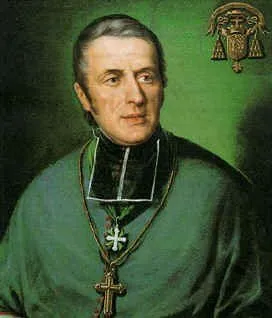
St. Eugene de Mazenod
Founder & Patron Saint
OMI
1816
The Founder
We began 188 years ago, on January 25, 1816, when Father Eugene de Mazenod and four companions came together to preach missions in Provence, in the rural countryside of southern France. What started as a small band of missionaries has grown into a worldwide congregation spanning five continents.
Fr. de Mazenod had a big heart, a great capacity for affection; some of this has probably remained in us. His vision was clear: to bring the Good News to those who had not yet received it, and where the Church was already established, to commit to the groups it touched least.
4,440
Oblates Worldwide
580
In Formation
5
Continents
"Among yourselves practice charity, charity, charity — and, outside, zeal for the salvation of souls."
— St. Eugene de Mazenod's Testament
Global Mission
The branch planted in Aix-en-Provence has thrived across the world.
700+
Africa
165 in formation
1,450
Europe
Historical roots
630
Asia
Expanding mission
1,110
Americas
Canada & USA + Latin America
New
Foundations
Guinea Bissau, Cuba, Turkmenistan...
Who We Are
We are missionaries. We are not specialized, except in facing urgent needs. It was enough for bishops to come to our Founder and say: "I do not have anybody..." for him to act, re-examine his manpower, cut personnel here and there, and release 2 or 3 men for these new needs.
You see, it is a question of passion, of missionary concern. We do everything. We are not complicated. That is found in our way of welcoming our guests.
Close is the word that people often use to speak about us. We are not complicated. Fr. Gerard wrote: "The secret with the Basuthos is to love them, to always love them, to love them anyway."
This closeness makes us learn their languages and become one of them. It saves us from the danger of becoming officials. It is often why people love us and regret to see us leave.
Daily generous fidelity, often heroic, that is the way followed by our brothers whose holiness the Church has recognized: St. Eugene de Mazenod, Blessed Joseph Gerard, and Blessed Jozef Cebula.
We are not made for ordinary pastoral work! The original project was to bring the Good News to people who have not yet received it, and where the Church is established, our commitment is to the groups it touches least.
Our presence in Marian Shrines can be the beginning of an answer. We are in Lourdes, Our Lady of Snows, Koden, Madhu, and recently established a community in Loreto, Italy.
Our Rule
These quotations show both the realism and the ideal of our life. Seeing the demands of our commitment sometimes frightens us. Mediocrity is always a potential danger.
Whoever wishes to become one of us must have an ardent desire for his own perfection, and be enflamed with the love for Our Lord Jesus Christ and his Church and a burning zeal for the salvation of souls.
Rule of 1853
We are men set apart for the Gospel, men ready to leave everything to be disciples of Jesus.
Constitution 2
The community of the Apostles with Jesus is the model of our life.
Constitution 3
Like the Apostle, to preach "Jesus Christ, and him crucified... not in loftiness of speech." That is to say, by making manifest that we have pondered in our hearts the words which we proclaim.
Rule of 1826
Wherever we work, our mission is especially to those people whose condition cries out for salvation and for the hope which only Jesus Christ can fully bring.
Constitution 5
The Founder left us a legacy: "Among yourselves practice charity, charity, charity — and, outside, zeal for the salvation of souls." In fidelity to that testament, each member's zeal is sustained by the bonds of fraternal charity.
Constitution 37
The Present Hour
The Epistle to the Hebrews says that Moses walked as if he saw the Invisible One. This is somewhat our situation.
Generosity, selflessness, community... God... are not popular values! Life commitment is often frightening! Will we be the last links in a great history, or will the heritage be carried on again vigorously and joyously by new generations?
The globalisation of poverty and the concentration of wealth have made precarious the life of so many. Misery is a theological question. God, in man His image, is condemned to live in sub-human conditions! How can we not commit ourselves to changing the "structures of sin"?
The encounter with Buddhism, Hinduism and Islam raise new questions. Long ago, our brothers in the field were working to create bridges. We must mention Father Marcello Zago, our former Superior General, kingpin of the historical meeting in Assisi in 1986.
While the Congregation decreases in the northern hemisphere, it grows in the southern hemisphere. It is time to make way for others, to accept changes, to adapt structures and cultures.
How to help the post-modern and post-secular world discover the richness of the Christian faith? Points of reference are confused, values are like stocks, they go up and down! Each person tries to lead its life, as if alone in the world.
We are thus confronted with new situations and new questions, both internal and external. It is a time of courage! The Church constantly needs renewal, revival, deepening.
"Always close to people with whom they work, Oblates will remain unceasingly attentive to their aspirations and values..."
Constitution on Mission